The benefit for cities having from smart technology

  • More effective, data-driven decision-making
  • Enhanced citizen and government engagement
  • Safer communities
  • Reduced environmental footprint
  • Improved transportation
  • Increased digital equity
  • New economic development opportunities
  • Efficient public utilities
  • Improved infrastructure
  • Increased workforce engagement

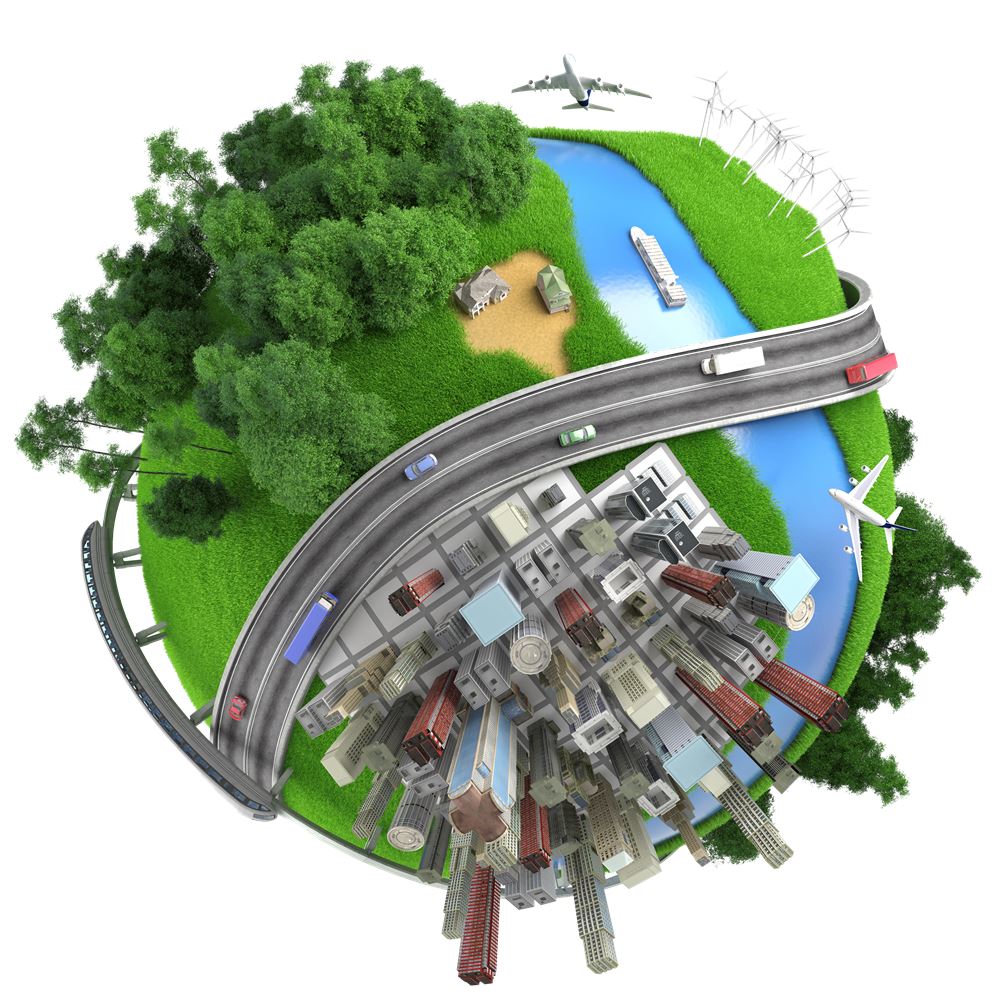
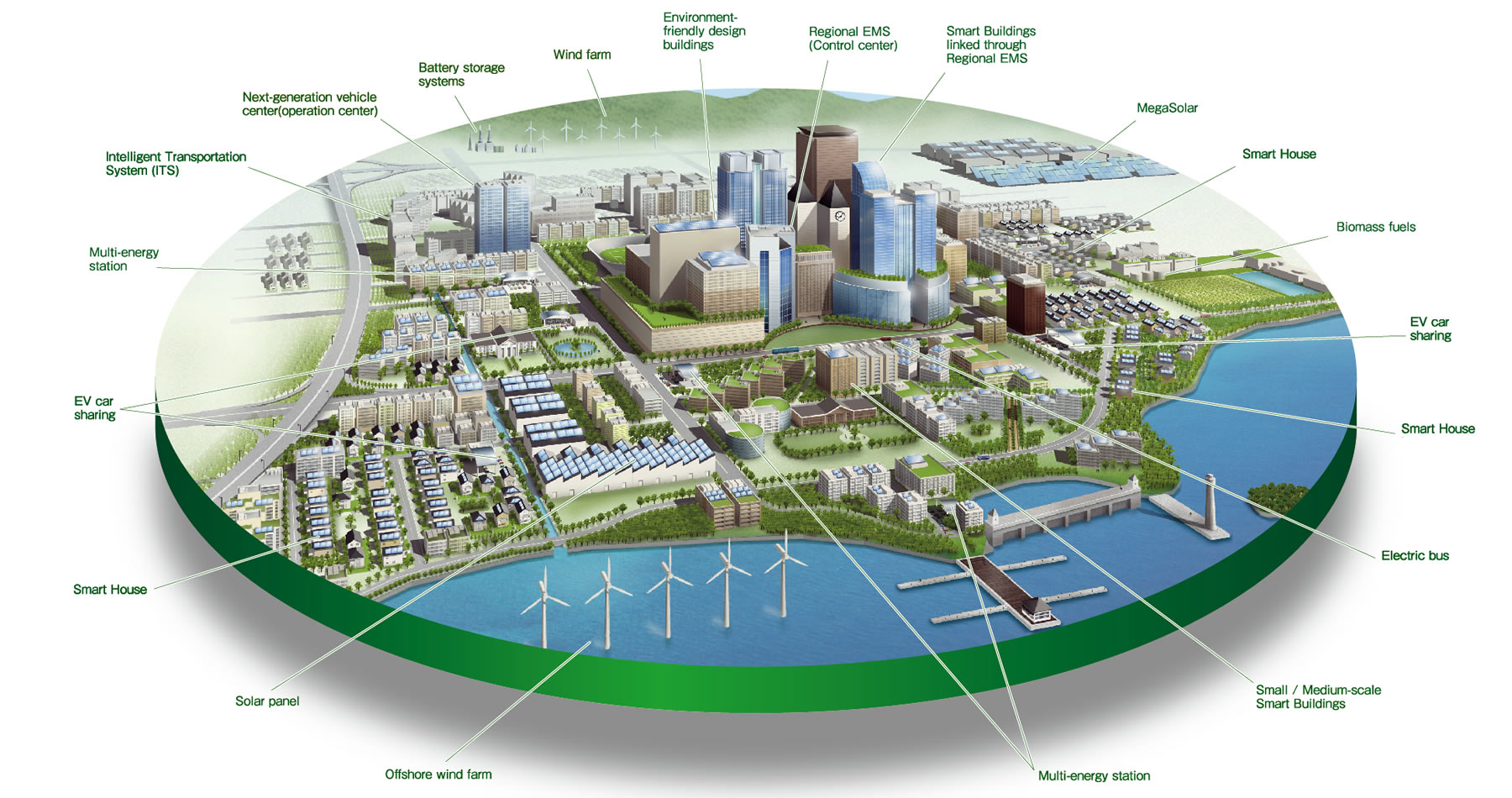
Smart city concept

Energy

Transportation

Safety & Security

Smart City Concept – Source: DefenseForumIndia.com

Smart City Concept – Source: DefenseForumIndia.com

Waste

Water

Air

Example of smart city innovations

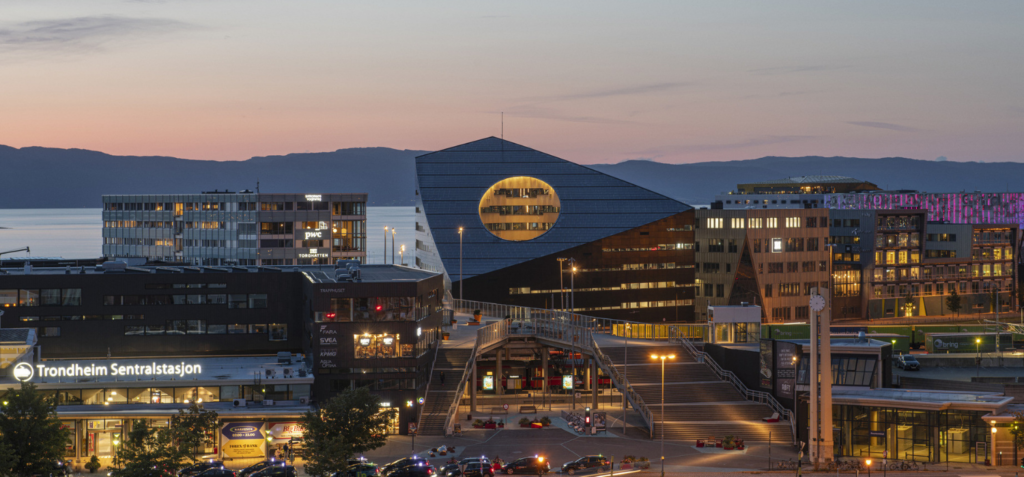
World`s northernmost energy-positive building

Photo source Snohetta Powerhouse Brattørkaia, in Trondheim, Norway, is an energy-positive office that became the most sustainable building to date when it opened a few months back. The office, measuring 18,000 sq m (193,750 sq ft), was designed by architecture collaborative Snøhetta. The building uses a variety of different technologies to radically reduce energy use in its daily operations. These include the use of a heat pump system, collecting rainwater for use in toilets, and using seawater from the nearby fjord for heating and cooling. To generate energy, the roof and the upper part of its facade are covered in 3,000 sq m of solar panels. These produce around 500,000 kWh of electricity a year, more than twice as much as the building requires. The excess energy is supplied to nearby buildings and used to powering electric vehicles, turning the building into a power plant. Energy storage is also built into the building’s footprint. Batteries are used to store surplus energy in the summer, when it is light for up to 20 hours a day, providing energy in the winter months when daylight is at a minimum.

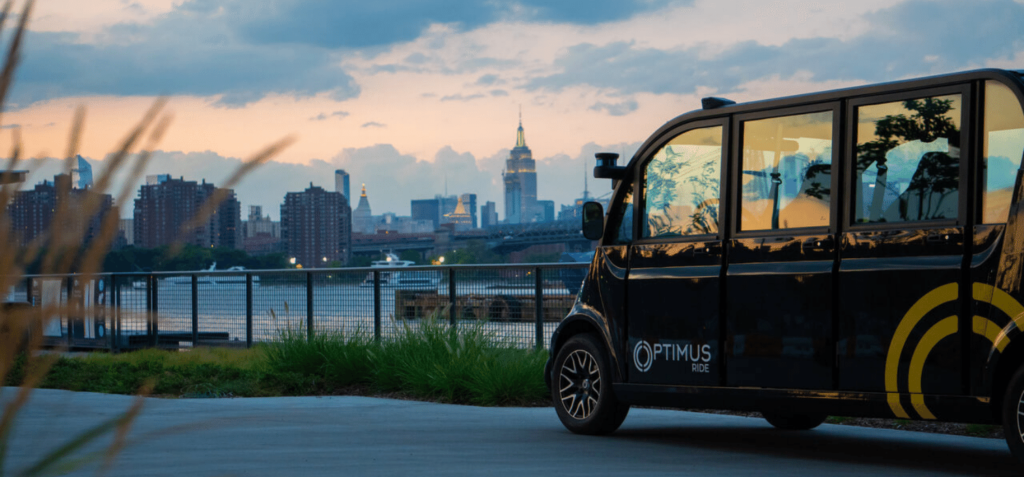
Free, self-driving shuttle service stars in New York

Photo source Optimus Ride Autonomous vehicle company Optimus Ride launched New York’s first self-driving vehicle program. The programme allows workers at the Brooklyn Navy Yard industrial park to ride for free between the NYC Ferry stop at Dock72 and the Yards’ Cumberland Gate at Flushing Ave. The service is expected to carry around 16,000 passengers a month. The company, a startup out of MIT, uses geofencing to allow its autonomous vehicles to safely move through areas it has thoroughly mapped. The strictly defined areas where the vehicles drive help them learn what the company calls the “culture of driving” on different roads. Optimus Ride’s vehicles use a machine vision system to rapidly identify objects and make predictions. Location-specific details, like the turn radius of buses used in different communities, are learned quickly by the system because it focuses on a defined area, rather than everywhere.

Crosswalk lights use AI to anticipate potential accidents

Photo source Günther Pichler GmbH Vienna installed around 200 pedestrian crossing lights that can recognise when a person wants to cross the road. The system was commissioned by Municipal Department 33 of the City of Vienna and developed by a team at the Institute of Computer Graphics and Vision at TU Graz University. It is intended to replace the push-button system and can adapt to give large groups and people with disabilities more time to cross. The system uses cameras mounted on the traffic light that have a large visual field. The research team used global movement models and recorded data to develop learning algorithms, which recognise when a pedestrian wants to cross the street. The system then triggers the light to change. Images are analysed locally by on-sight computers and are not saved. The traffic lights are equipped with a monitoring system that can report faults immediately. They can also work in all types of light and weather conditions. The hope is that the system will not only make crossing safer and faster but will also allow smoother traffic flow.

City ​​plans

Visions for futuristic cities where life-improving technologies proliferate have been around since the dawn of science fiction. Yet flying cars and buildings up in the clouds – typical scenes from The Jetsons – are nowhere in sight. Here we have several plans that are in progress.

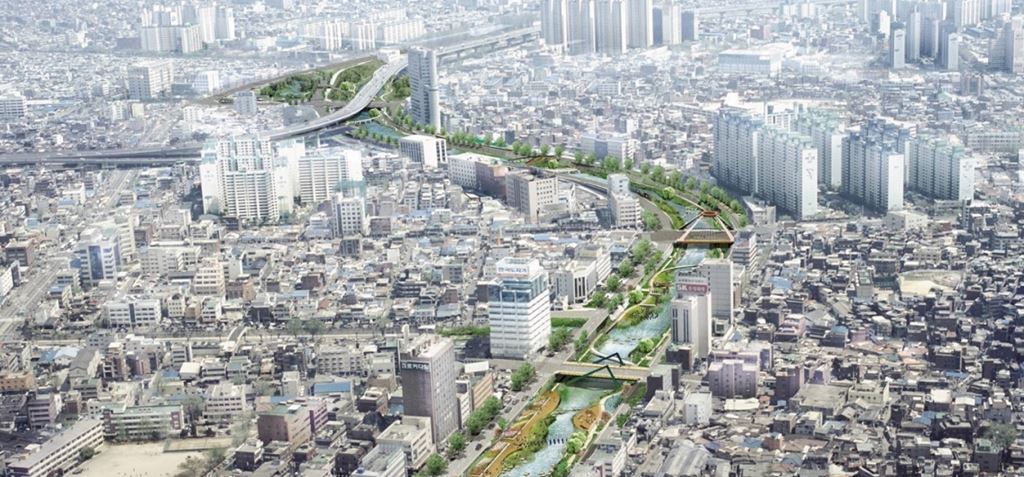
Project river in Seoul

How is Seoul, Korea transforming into a smart city?

As the world urbanizes rapidly, cities continue to be the physical and social base for people’s prosperity and nature’s sustainability. In recent years, the idea of “smart cities” has grown more prominent as new solutions emerge to address urbanization challenges. Smart cities like Seoul also reorganize public spaces as important assets to improve the quality of life and sustainability.

Our story
Photo source Stefanoboeriarchitetti.net

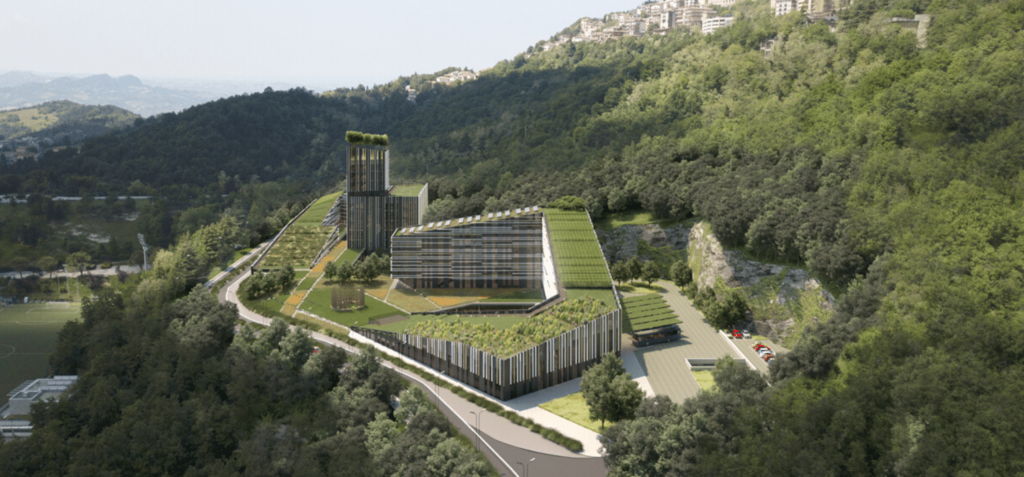
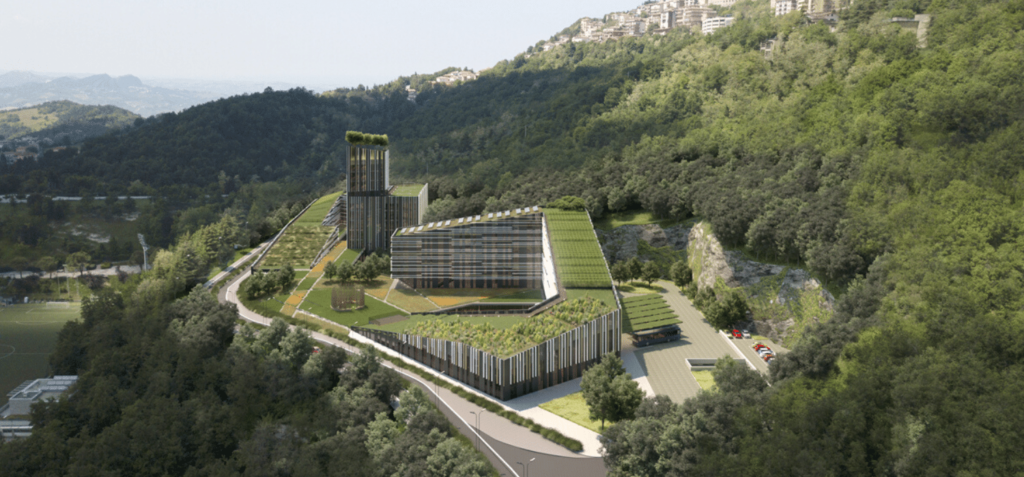
Plans for a smart forest city in Mexico

Italian architect Stefano Boeri developed plans for a new, eco-efficient forest city in Cancun, Mexico. The plan calls for the 557-hectare site to contain more than 7.5 million plants, capable of absorbing 116,000 tons of carbon dioxide each year.

Our story
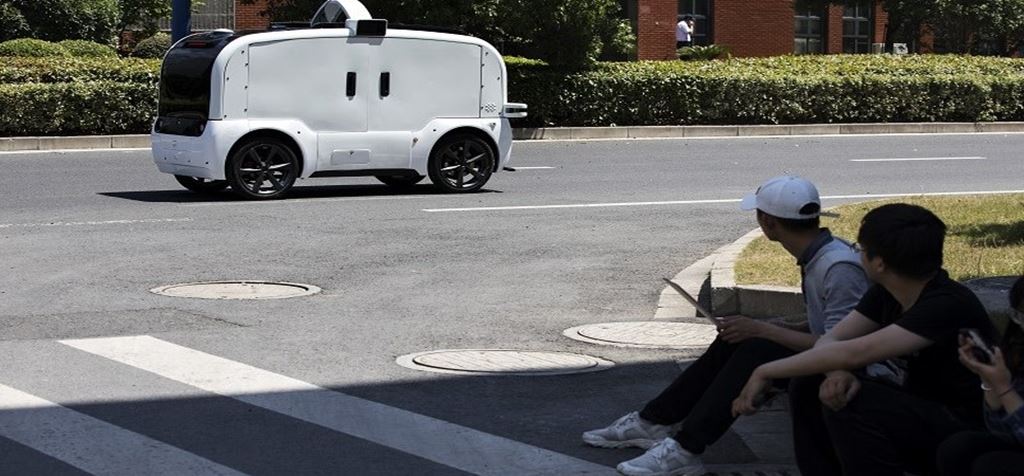
An autonomous vehicle out for a test drive in China Giulia Marchi-Bloomberg via Getty Images

Autonomous vehicles

The Chinese city of Guangzhou went a step further, recently granting licenses to five Chinese companies to allow autonomous vehicles on selected streets.

Our story

Resume

A lot of the smart-cities technology is like this—it’s changing how we do things, but often not what we do.

Like its brethren S-words “smart growth” and “sustainability,” “smart city” can mean just about anything. I define it as the marrying of the city, in both its urban and suburban forms, to the telecommunications revolution signified by the silicon chip, the Internet, the fiber-optic line, and the wireless network. Because this revolution is so broad, deep and ongoing, it’s impossible to list all the present and future ways these technologies can—and will—reshape how and what cities, and their inhabitants, do. It’s my Fitbit.
It’s cameras in plazas; sensors in sewers and water mains; an official in City Hall controlling individual streetlights through a smart grid; cities laying their own fiber-optic lines and creating their own broadband networks, and big companies seeking to stop them through lawsuits and lobbyists. It’s New York City using GPS data from taxicabs to do traffic planning; driverless cars; entirely new cities, such as Songdo in South Korea; a smartphone app that alerts you that a train is two minutes away. And it’s the related data—the big data—collected from these systems.

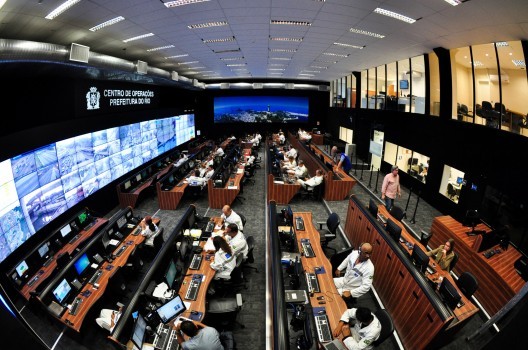
In a new glass-skinned cube of a building, called the “Centro de Operações,” officials sit in a theater-size room behind personal computer screens, while in front of them a giant screen beams out constant information about the city.

“The old city of concrete, glass, and steel now conceals a vast underworld of computers and software”

Writes Anthony M. Townsend in Smart Cities: Big Data, Civic Hackers, and the Quest for the New Utopia (W. W. Norton & Company, 2013), perhaps the best book written on the phenomenon.

“Not since the laying of water mains, sewage pipes, subway tracks, telephone lines, and electrical cables over a century ago have we installed such a vast and versatile new infrastructure for controlling the physical world.”

Many of the smart-city initiatives—whether lighting in a building, trains in a subway, drivers on streets, or airplanes in the sky—revolve around collecting information about the moving parts of a system in real time, to allow a central operator more control. Again, this raises the question: who will have that control? Large companies are involved in many of these efforts, and it bears watching how much control or veto power they end up with as city governments contract with them.

“We don’t give them just the data; we give them predictions, and recomme
ndations as to what to do about it,” says Laura Wynter, director of IBM’s Singapore Research Lab.

Looking for more information?

© netframesoft.com